
 The Mastermind (Kelly Reichardt, 2025)
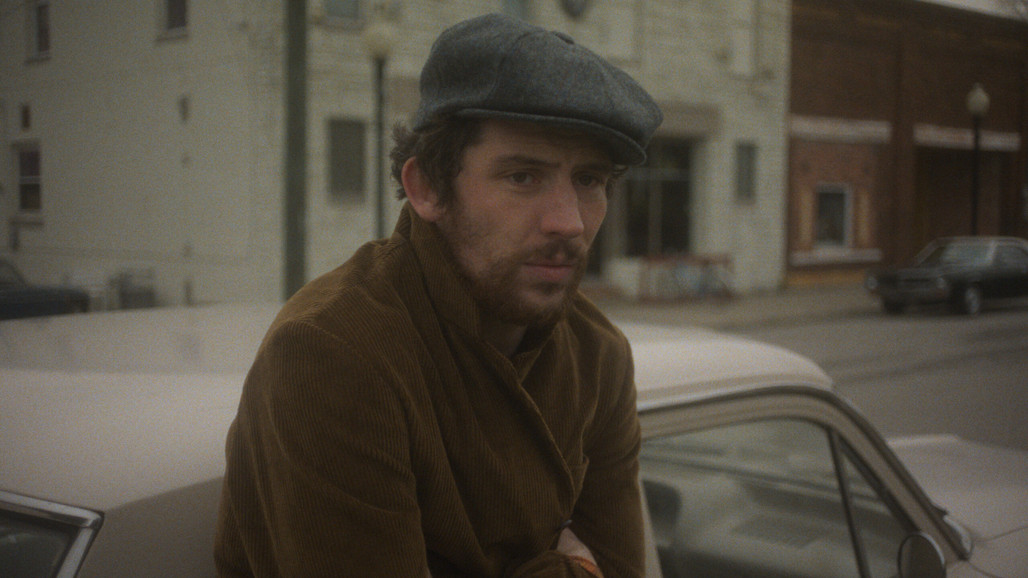
Set in 1970 suburban Massachusetts, Kelly Reichardt’s latest unfolds against the turbulence of the Vietnam era, protests and arrests on the streets, Nixon in the White House, images of mechanical warfare on television, a divided nation in moral freefall. Into this atmosphere drifts J.B. Mooney (Josh O’Connor), feckless furniture designer and art-school dropout who plans to rob four paintings in a museum heist, perhaps partly for financial gain but seemingly even more out of an undefined need to rebel against his middle-class existential crisis. Despite being from a well-off family (his father is a judge), he’s a confused, restless man chasing a freedom he can’t define while endlessly depending on his wife and mother to bail him out.
Reichardt takes a real event as loose inspiration — the 1972 Worcester Art Museum robbery — and reimagines it as the story of a man seeking meaning by turning to crime, a quiet revolt doomed as much by its own lack of resolve as it is by amateurishness. The robbery itself is stripped of glamour, the ‘mastermind’ of the title no career criminal, his partners just as incompetent, and as she did for the eco-thriller in Night Moves (2013) Reichardt deliberately peels back the genre layers to give us not a suspenseful heist movie but gradual disintegration.
I’ve compared Reichardt to the sensibilities of Robert Altman before, in my review of Certain Women, and there is something of Altman’s “beautiful losers” in J.B. Mooney, a self-deluding dreamer whose half-baked scheme inevitably flatters to deceive. But whatever “beauty” or “dreaming” there once was in J.B. seems long drained from him by the time Reichardt turns her gaze his way. Another New Hollywood reference offers itself: as J.B. goes on the run in full ‘rolling stone’ mode, escaping from the intangible pressures he feels from his family as much as from the police, it becomes easy to imagine him as a relation of Jack Nicholson’s Bobby Dupea in Five Easy Pieces, whose downward social trajectory from his affluent dysfunctional family also turned him into a rootless drifter. The muted autumn palette and faintly grainy texture evoke such New Hollywood tones, while Rob Mazurek’s jazzy, unresolved score mirrors Mooney’s restless state of mind, always building toward something that never quite arrives.
It barely needs to be said that “they don’t make films like this anymore” and as much as sensitivities hark back to a 1970s golden age, Kelly Reichardt is one of the most unique filmmakers around, bringing a completely different feel for detail, process, and rhythm than the men of the New Hollywood did. And, in the end, it is clear that The Mastermind is a film of the time in which it was made, a 2025 America that belies glaring parallels with its 1970 predecessor. As J.B. attempts to float free of all collective energies around him, ignoring anti-Vietnam War demonstrations, channelling all his energies only in the undefined malaise in his soul rather than any wider more meaningful enterprise, the film is a portrait of a man incapable of interacting with the currents around him.
In J.B.’s isolation, Reichardt sketches a predicament just as applicable to the USA today: protests and arrests on the streets, Trump in the White House, images of mechanical warfare on television, a divided nation in moral freefall. As a man who literally takes public property (the paintings from the museum) for personal gain, he remains indifferent to all causes, mistaking private rebellion and detachment for individual freedom. Yet with an elegant final pull-back, after J.B. has been swept away by the very currents he thought himself outside of, the film delivers its quiet warning: those who refuse to see the bigger picture are inevitably swallowed by it.
 Cinescope