

 A Clockwork Orange (Stanley Kubrick, 1971)
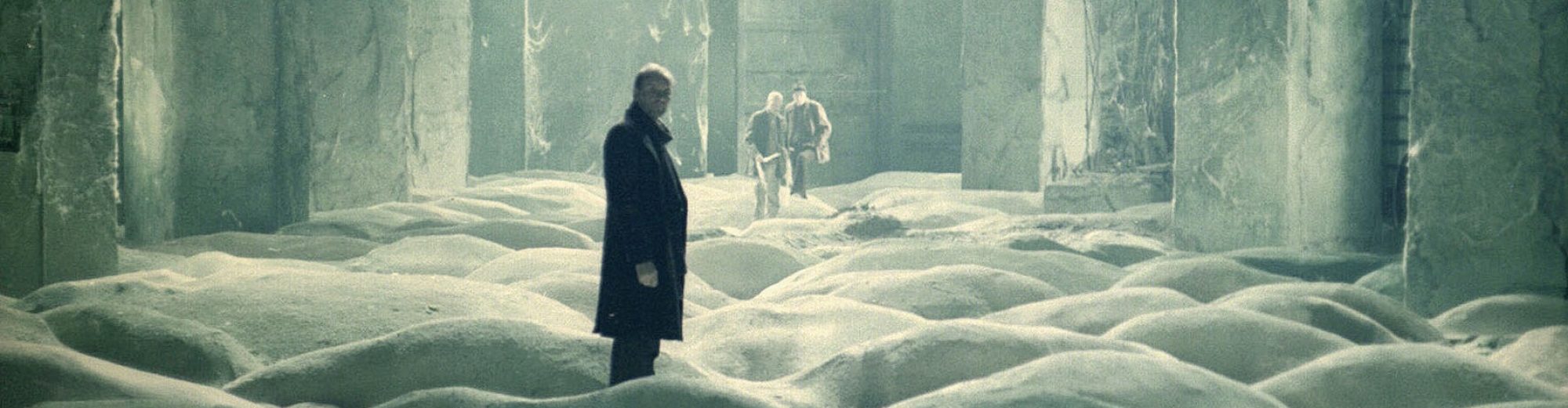
Some years ago, as a new postgraduate student at Brunel University, I wandered the campus and felt a strange déjà vu. One building in particular — all Brutalist concrete and strange Cubist massing, like Easter Island statues reimagined by Le Corbusier — seemed oddly familiar. It wasn’t until a professor mentioned it had featured in A Clockwork Orange, as the Ludovico treatment facility, that the memory clicked into place. I hadn’t seen the film in over a decade, but something in its textures — its visual tone, its architectural menace — had lodged itself deep within me. Like the involuntary responses of the film’s protagonist, Alex, mine was aesthetic and unconscious.
Much ink has been spilled on the controversy around the film’s violence (let’s face it, pretty tame by today’s tolerance levels) or on its rather shallow status as a totem of counter-culture cool — yes I too, dear readers, once had the obligatory bedroom poster bought from Camden Market — when all of that is said and done, and the shock has faded, what endures is Kubrick’s startling formal imagination. A Clockwork Orange is a stylistic monument: Kubrick knew that in an ocean of cultural uniformity, for a film to stand out it had to first be interesting aesthetically, and more than this Kubrick’s vision is disturbingly precise in how it uses style as argument
So he used every asset at his disposal to create stylistic frissons: the wide-angle lens cinematography giving everything an off-kilter look; the costumes that have since become iconic; the use of slow-motion, pop-art montages and sped-up up shots giving the film an almost experimental style at times (inspired by Kubrick’s viewing of Japanese new wave cinema as I show in my video here); the contrast of performances between McDowell’s gleeful rebelliousness as the vivacious sadist Alex and the cold restraint of the British character actors around him; the euphoric symphony of Beethoven or Rossini or Wendy Carlos’ electronic arrangements on the soundtrack; and yes, Kubrick’s judicious choice of locations — like that Brutalist Brunel building — to anchor the film in a vision of what the future might look like from the perspective of 1971.
But, I hear you judiciously ask, is this not just style for style’s sake? Re-viewing this film now slightly older (and hopefully wiser) than my teenage self, I am inclined to disagree. Form and content do match here. The film is, in part, about style itself — about the visceral reactions it provokes, and the human impulses it reveals. Alex’s passion for Beethoven isn’t cultivated or learned; it’s instinctive, almost primal. Alex is not ‘cultivated’ nor ‘cultured’ in any orthodox sense, he hardly attends school and has no background in studying classical music: yet his instinctive response to the music he loves is overwhelming and it is his alone. His Stendhal syndrome response — the skin-prickle, the wide-eyed awe, the transportation into reverie — is, paradoxically, the one aspect of him that feels unmechanical. He may be monstrous, but in his love of music, he is recognisably human.
A brief note here on the original book and its title: Anthony Burgess, who often delighted in linguistic wordplay, borrowed many words from Russian to create the slang dialect spoken by Alex, his ‘droogs’, and their generation. But he also spent years in colonial Malaya (he wrote several novels set there) and we can reasonably read “orange” as a pun on the Malay orang, meaning “man” (‘orang utan’, by the way, means ‘man of the forest’). A clockwork orang, then, is a man mechanised, robbed of will, of choice, of aesthetic response – everything Alex is forced to become. When the Ludovico treatment strips Alex not only of his violent impulses but also of his joy in Beethoven, we understand the cost. To remove evil by removing freedom is to also remove what makes him human. His aesthetic sensitivity is no longer his own.
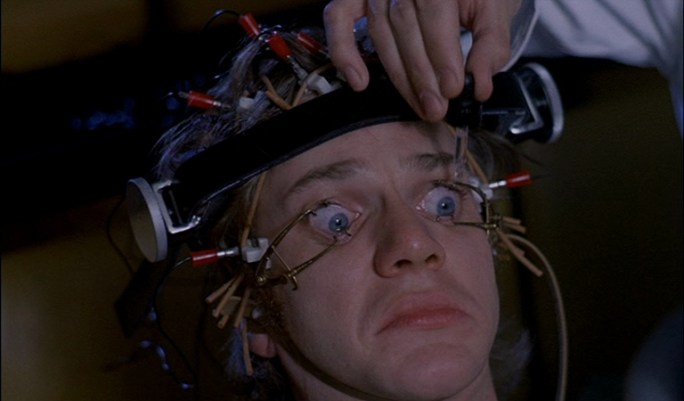
The film (and of course Burgess’ source novel) asks big philosophical questions about nature vs nurture, and even if I tend to disagree with Kubrick’s stance (I think he sides more towards nature while I more towards nurture), the film does offer a rich fount of possible discussion. If Alex’s intrinsic love of music is part of his very core every bit as much as his inherent violence, as seen by how the Ludovico treatment ends up yoking the two together, then removing his violent instinct by force is equally as dehumanising as stunting his love of music. Once one is gone, so too is the other. Both make us human and both must be faced: the cultivated ‘beauty’ of sublime music and the deep-rooted history of violence within us. If the human species could ever transcend its evolutionary history of violence through such methods, deprived of free will and choice, would that be justifiable? Or can we overcome our own nature through other means? Big questions which relate to one of Kubrick’s pet themes which he deals with here armed with a fitting stylistic bravado: the question of what it means to be human and what it means to be de-humanised.
Viewed this way, A Clockwork Orange fits within Kubrick’s larger body of work, especially alongside 2001: A Space Odyssey — both explore what it means to be human, and what it means to be dehumanised. It also can form part of an informal trilogy with Barry Lyndon and Full Metal Jacket: each tracks the picaresque journey of a young man (Alex, Barry Lyndon, Private Joker respectively) through rise and fall, war and spectacle, detachment and destruction, all shaped by the systems that surround them. Each has a clear three-act structure: in Kubrick’s A Clockwork Orange (which famously left out the final chapter of Burgess’ UK edition of his novel in which Alex truly changes), Alex in Act 3 (post-Ludovico treatment) ends up exactly the same as Alex in Act 1 (pre-Ludovico treatment). So goes Alex’s rehabilitation in Kubrick’s cynical and cyclical view.
So too, my dear droogs, should this film be viewed after decades of sensationalist controversy and teenage idolatry for what it really is: a fine yoking of style and theme by one of cinema’s greatest aesthetic masters. A film about the terrible beauty of being human — about violence, yes, but also about the sublime. And about making us feel it, whether Beethoven’s music, the precision of the cinematography, or the strange Brutalist architecture’s retro-futuristic vision, it is the style that stays with us.
 Cinescope