
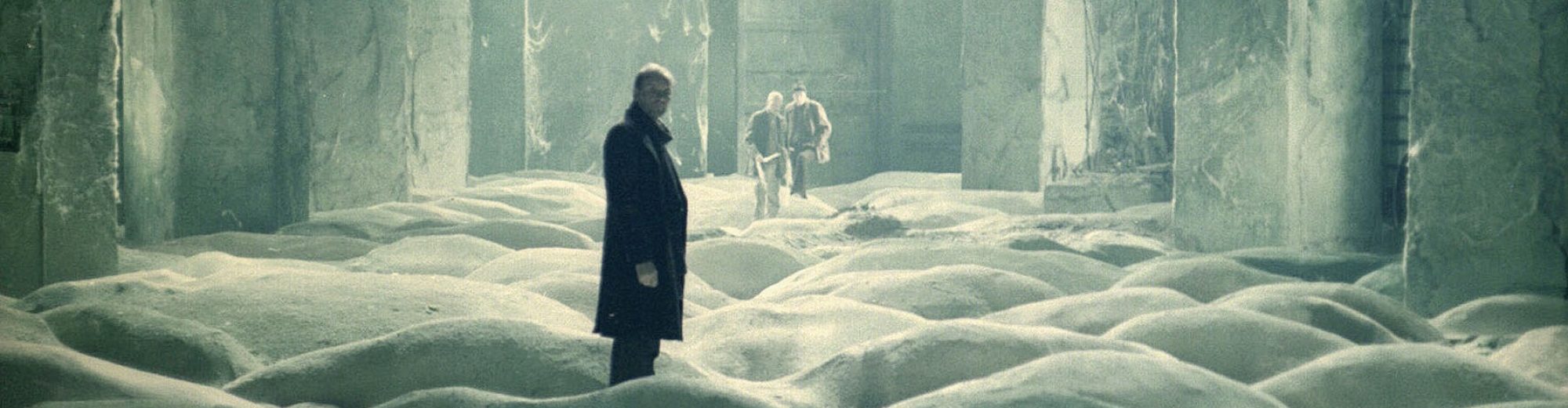
Tucked all the way down under on the international film map, Australian cinema has always been difficult to categorise. It’s not quite Hollywood, not quite ‘world cinema’, and mostly known for exporting stars and directors on their way to bigger-budget productions. Yet Australia was also an early filmmaking pioneer. In 1906, The Story of the Kelly Gang became what is generally recognised as the world’s first feature-length narrative film. Even during the leaner decades of the mid-20th century, independent feature films like Charles Chauvel’s Jedda resonated as early attempts to confront the fundamental questions of race, land and belonging lurking beneath Australia’s claims to coherent nationhood.
Then, in the 1970s, came a real renaissance in the Australian film industry. Federal investment, new training initiatives and state organisations such as the South Australian Film Corporation gave local filmmakers the means to make ambitious features on a sustained basis. A fertile ecosystem of filmmaking arose, consisting of literary adaptations and scabrous comedies, historical reckonings and children’s films, intimate art cinema and unsettling horror, a diverse range of films united by the excitement of seeing Australian stories, landscapes and voices on screen with renewed confidence. Some of these films would put Australian cinema on the map — most famously Peter Weir‘s Picnic at Hanging Rock. But beyond Weir’s mysteriously atmospheric tale of vanishings in a Victorian girls’ school, this Australian wave has much else to offer.
The ten films below, arranged chronologically, offer one route through that map: from the Outback as existential hell to the coast as ecological sanctuary; from buried colonial violence to feminist self-invention; from making Australian myths out of modest newsreel craftsmen or out of oil-guzzling road warriors. Together, they show how many different kinds of Australian cinema are possible.
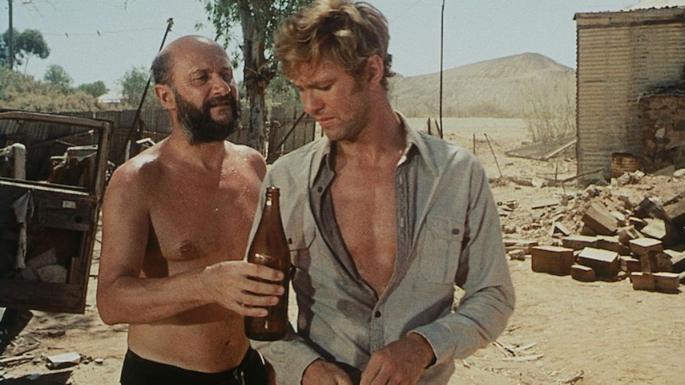
Wake in Fright (Ted Kotcheff, 1971)
In the story of the Australian New Wave, 1971 serves as a kind of prologue. That year, two films directed by outsiders — Nicolas Roeg’s Walkabout and Canadian filmmaker Ted Kotcheff’s Wake in Fright — showed Australia through a fresh, unsettling gaze… not just to the world, but to Australians themselves. Roeg and Kotcheff brought an outsider’s alertness to their adopted landscapes, exposing the incongruities and contradictions long normalised in the eyes of locals.
Kotcheff’s film is part psychological thriller, part cultural X-ray, and part sweat-soaked fever dream of a lost weekend. It follows a young, mildly arrogant schoolteacher unhappily bonded to a one-room school in the Outback, who heads back home to Sydney for the Christmas holidays, only for his overnight stopover in the dusty mining town of Bundanyabba to turn into an existential nightmare. In this sunbaked town, which Kotcheff films like a purgatory, boozing and betting on the outcome of coin-tosses seem the only available means of killing time. Gradually, the teacher descends into an inescapable spiral of primal regression, his cultivated sense of superiority dissolving under the heat, alcohol and that coercive macho camaraderie Aussie blokes proudly call ‘mateship’.
The genius of Wake in Fright lies in the way it turns such cherished Australian virtues as hospitality and mateship into instruments of entrapment. Nobody exactly forces our hapless protagonist to drink, gamble, fight or join a harrowing kangaroo hunt (which uses actual hunting footage as Kotcheff refused to stage a new one for the film) — his hosts simply make refusal socially impossible. The Yabba becomes a hell of endlessly replenished beer glasses, of ritualised masculinity, and of boredom fermenting into violence, presided over by Donald Pleasence’s unforgettable Doc Tydon, a leering, nihilistic philosopher-devil whose opening line — “All the little devils are proud of hell” — could serve as the town’s motto. But, Kotcheff’s film is not simply a scathing demythologisation of Australian bush life. It also turns its gaze upon the supposedly civilised schoolteacher-outsider, whose intellectual pretensions and air of superiority prove a flimsy defence against the animal instincts lurking underneath.
Nearly lost to time before being rescued and restored decades later, Wake in Fright remains one of the most savage cinematic dissections of a nation’s self-image. It ends, cyclically, almost exactly where it began, but the man who has returned is no longer quite the same. His descent into the heart of darkness has brought him face to face with something that all his books of philosophy could never have taught him: the darkness within himself.
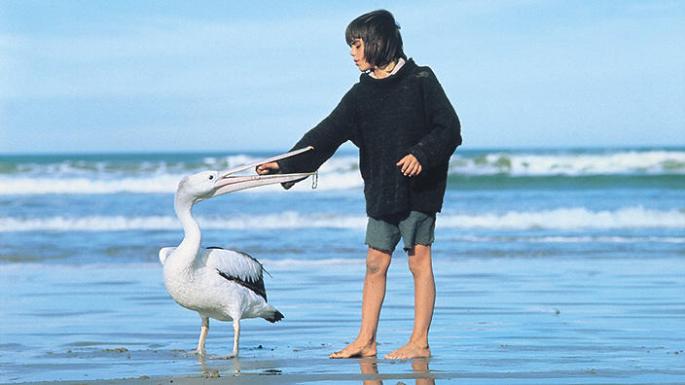
Storm Boy (Henri Safran, 1976)
One achievement of the new film culture was its willingness to draw from Australian literature, not seeing adaptation as uncinematic or pretentious, but as tapping into source material with the same Australian authenticity they wanted to bring to screen. Picnic at Hanging Rock was of course adapted from Joan Lindsay’s classic, and more adaptations followed, including Storm Boy, based on a beloved children’s book by author and environmentalist Colin Thiele.
Storm Boy centres on a lonely ten-year-old boy, Mike, who lives with his reclusive fisherman father in South Australia’s Coorong wetlands. Alone for much of the day while his father fishes, he explores the coast on a homemade raft with innate curiosity, like Australia’s answer to Huck Finn, until two encounters forever enlarge his world. The first is with Fingerbone Bill (played by the great David Gulpilil), a roaming Aboriginal man who lives off the land and gives him the name Storm Boy; the second is with three pelican chicks orphaned by illegal hunters. One of these pelicans will be raised and trained by Mike, and become his inseparable companion. Thiele’s gentle fable of a boy’s union with nature, profound in its simplicity, is essentially about how to reconcile the inner and the outer worlds, the mind of a solitary boy and the awe-inspiring nature around him. The ingredients might suggest a sentimental animal adventure, but Henri Safran’s film is quieter and emotionally deeper than that. Geoff Burton’s elemental photography turns the Coorong at once into sanctuary, classroom and contested territory, a place where the boy learns that intimacy with the natural world cannot mean possessing it. Like Ken Loach’s Kes, the film understands that the bird embodies both freedom and the painful necessity of letting go.
As Fingerbone Bill, Gulpilil provides humour, warmth and authority, helping to make the film one of the period’s comparatively rare Australian productions to place an Aboriginal actor in a substantial, positive role. Its representation remains shaped by a white writer and filmmakers, but Gulpilil’s presence complicates any simple paternalism — Bill is not merely the dispenser of ‘wisdom’ but another outsider, connected to the boy through his own experiences of displacement and loss. Tender without becoming sugary, ecological without becoming preachy, Storm Boy is a genuinely inter-generational classic of the new wave era.
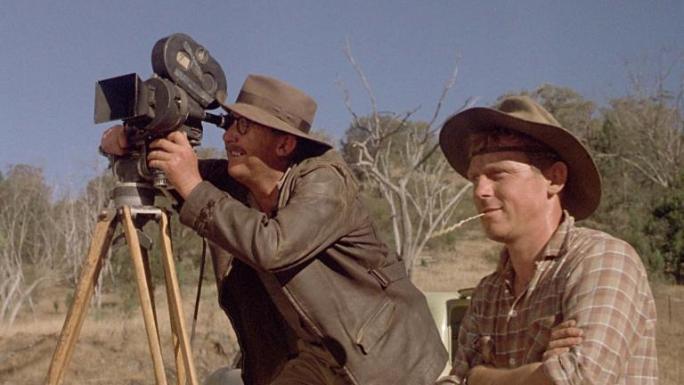
Newsfront (Phillip Noyce, 1978)
Luchino Visconti once said cinema means “stealing images from reality,” and by that definition the tireless and rugged cameramen and sound recordists who are the subject of Newsfront were cinema’s most literal thieves. Before Australia had a proper film industry, and before television entered the country’s homes, the task of capturing moving images of the nation belonged to these newsreel crews. They raced to film natural disasters, sporting events and political speeches to play before (mainly Hollywood) features in suburban cinemas. Now largely forgotten foot-soldiers of the moving image, they seem unlikely subject matter for a major motion picture. But that is part of what gives Phillip Noyce’s early film its charm and, dare I say, its ‘Australian-ness’: a loving tribute to pluckily competent crews who get the job done, even when their industry is dominated by bigger and showier foreign behemoths.
Set between 1948 and 1956, Newsfront chronicles the rivalry between two competing newsreel companies during a moment of national transition: post-war optimism, Cold War anxieties, the rise of television, and the slow, clumsy emergence of a modern Australian identity — culminating in the 1956 Melbourne Olympics. Newsfront is also a portrait of a country coming into its own, stubbornly, unevenly, and often with wry humour, in the crucial post-WW2 years, when the foundations of an Australian identity and of the welfare state laid by Labor governments were being contested and reshaped.
The ensemble cast is a delight: a young Bryan Brown oozing charm; Wendy Hughes as a modern woman navigating the boys’ club; and at the film’s centre Len Maguire, played with marvellous solidity by Bill Hunter, an old-school, stoic cameraman attempting to preserve his professional principles while rival companies compete for footage and the industry around him moves towards extinction. But there’s no central drama, no grand climax — that is part of the film’s deliberate breeziness and unshowiness which mirrors that of its protagonists — its episodic narrative reels back the years, shows its characters at work, and takes in personal conflicts as well as the gradual changes in the industry and in the entire nation. Its low-keyness is exactly what now makes it feel so distinctive and radical: an intimate portrait of a small group of filmmakers, a national epic, and an anecdotal memorial of a bygone industry, all at once.
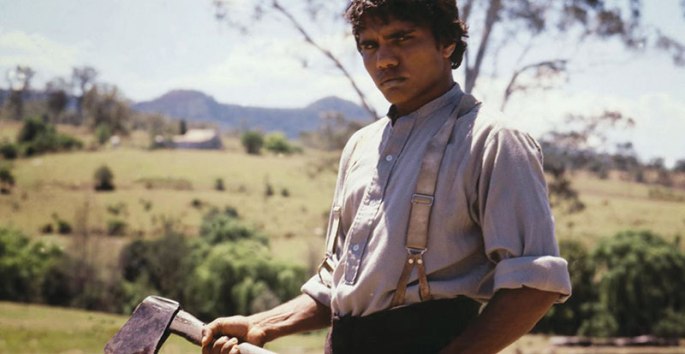
The Chant of Jimmie Blacksmith (Fred Schepisi, 1978)
Adapted from Thomas Keneally’s novel, a searingly spare fictionalisation of the real-life story of Jimmy Governor, The Chant of Jimmie Blacksmith is the Australian New Wave’s great howl of historical anguish. Jimmie, played by Tommy Lewis, is a young Aboriginal man of mixed heritage raised by missionaries to believe that diligent work, Christianity and marriage into white society will earn him acceptance. Jimmie believes, with heartbreaking sincerity, that if he follows the rules, he will be accepted. But the society around him offers only exploitation, humiliation, casual racism. Each new job exposes the fraudulence of the promises he believed in, each new attempt to leave behind his clan and settle into the propriety of white society reminds him of the hypocrisies and symbolic violence behind assimilation. White landowners exploit his labour, withhold his wages and tolerate him only while he remains visibly subservient. Having learned to wear what Frantz Fanon called the “white mask”, Jimmie gradually discovers that no performance of obedience can make him equal in the eyes of a status quo which requires his inferiority.
When years of humiliation finally erupt into atrocious violence, Schepisi matches the sharp prose of Keneally’s novel to create unforgettably taut and tense sequences. DoP Ian Baker’s widescreen photography repeatedly makes white settlement look like an intrusion upon the land, while in contrast capturing the way fugitive Jimmie seems almost absorbed into its contours, although the film’s visual magnificence never prettifies the brutality. It also refuses either to excuse Jimmie’s crimes or detach them from the colonial order that has produced his rage. Set around the eve of Australia’s federation in 1901, the film (again, like the novel) takes in a panorama of chorus-like voices, from local townsfolk, Jimmie’s acquaintances, and a butcher who moonlights as the state executioner, feeding us snippets of people’s reactions not only to Jimmie’s deeds but to the Boer War, the ongoing political debates about the future of Australia, and the state’s machinery of execution. A new Australian nation prepares to announce its modernity while preserving the racial violence upon which it has been built — Jimmie returns as the history it wants to keep out of sight, a pesky return of the repressed just as Australia wanted to assert itself as a nation in its own right in 1901.
In 1978, things were perhaps somewhat better but very far from being fully resolved. The Chant of Jimmie Blacksmith remains a necessary but ethically complicated landmark: an Indigenous-centred story written and directed by white artists (Keneally more recently admitted that today he’d think again about writing a novel from the POV of an Aboriginal character), and therefore unable to fully escape the representational limits of its period. Later works by Aboriginal filmmakers, including Warwick Thornton’s Sweet Country, have been influenced by it and have prolonged and expanded its legacy. But few films of the Aussie 1970s revival pressed harder or more painfully upon white Australia’s historical conscience.
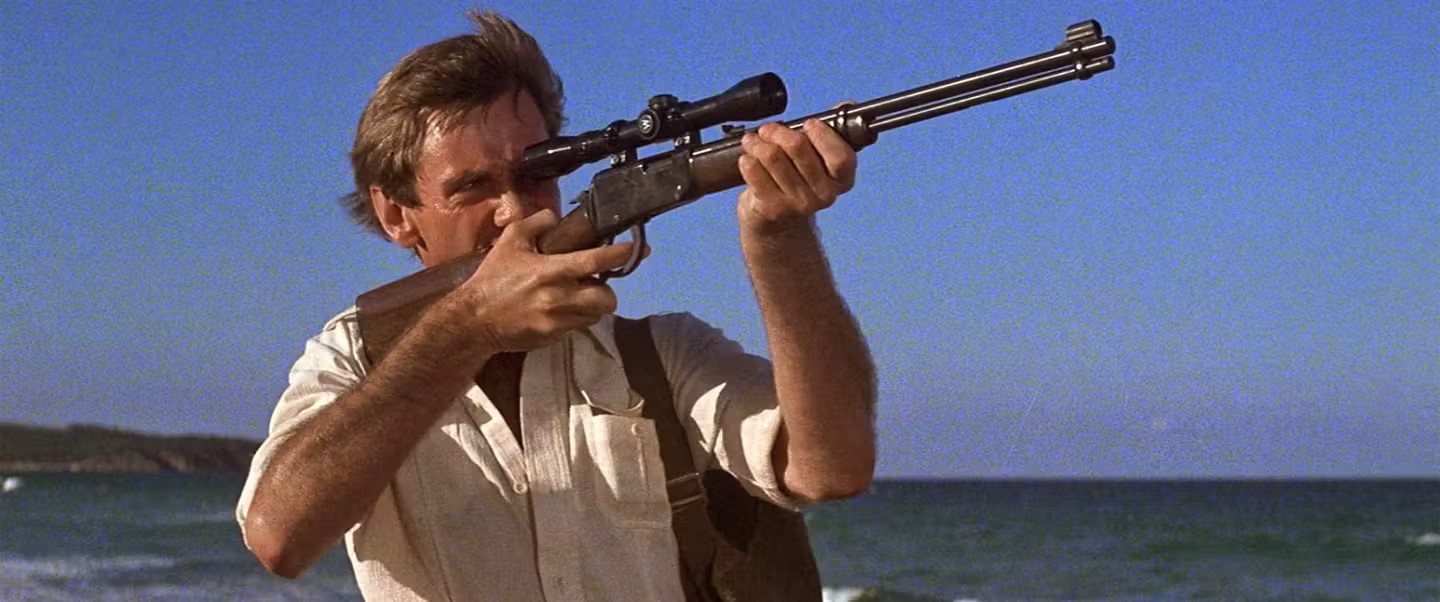
Long Weekend (Colin Eggleston, 1978)
A couple heads out to the coast for a camping trip. Their marriage is on the rocks, tension is already in the air, their conversations are brittle, their tempers short. Hoping that the great outdoors might repair a marriage poisoned by infidelity and resentment which neither has emotionally processed, things turn out quite the opposite. As they bicker, drink, and litter across the shoreline, treating with utter contempt that very same environment they hoped might heal them, spraying insecticide indiscriminately, cutting up trees, shooting at animals, nature begins slowly to respond. At first with quiet menace, and then with full-blown malice. Long Weekend is what happens when a marriage drama serves as the disguise for an unsettling ecological horror where disdain for nature gets its karmic dues. In a nutshell: respect the land, or it may stop respecting you.
Directed by Colin Eggleston and written by genre stalwart Everett De Roche, two regulars of the pulpy Ozploitation strand of 1970s Aussie cinema, the film channels the same dread-soaked atmosphere as Don’t Look Now or The Birds, but grounds it in a particularly Australian register. It is a continent shaped by a landscape that is not just beautiful or threatening, but also a constant reminder of the land belonging more fully to others — whether the Aboriginal tribes who’d been there for millennia or to nature itself. And so trees creak ominously, possums screech, the sea seems to wait. The terror isn’t sudden or spectacular, but incremental, creating the sense that the couple’s disrespect has tipped some ancient, unseen balance, a spiritual reckoning not unlike the one in Picnic at Hanging Rock, but where the mystery has curdled into malevolent eco-horror territory. Long a neglected cult curio, Long Weekend has in recent years gained more attention as film culture paid more serious attention to non-Hollywood genre movies, and has been hailed by directors like Mark Jenkin as a forebear of contemporary eco-dread movies.
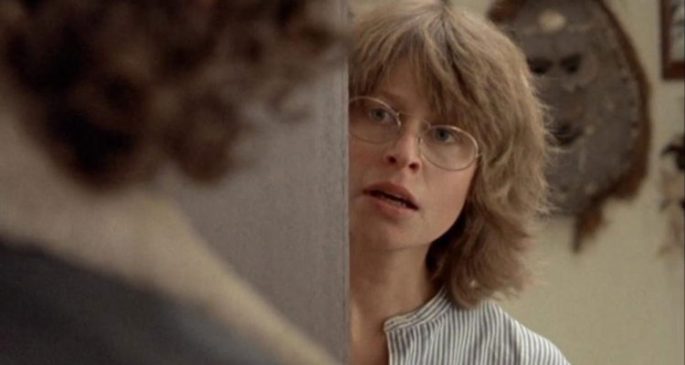
The Plumber (Peter Weir, 1979)
Jill and Brian are upwardly mobile academics, living in a university high-rise in Adelaide, recently returned from Papua New Guinea, where Jill conducted anthropological research. One day, her ordered existence is disrupted when a plumber, Max, arrives unannounced to inspect the apartment’s bathroom. At first jovial, Max becomes increasingly intrusive as his work expands over several days — he dismantles the bathroom, sings songs, tells contradictory stories and repeatedly crosses the boundaries Jill attempts to establish.
Peter Weir’s most famous works from the Australian New Wave — Picnic at Hanging Rock and The Last Wave — probe the limits of rationalism in the face of mystery, and form implicitly revisionist narratives about the uneasy encounter between ‘modern’ and ‘pre-modern’ cultures. The Plumber, made quickly for TV as part of Weir’s contract with the South Australian Film Corporation, tackles similar themes but in a very different way. It might appear more modest and is certainly less well-known, but in its taut 76 minutes it delivers some of the sharpest social commentary of Weir’s entire career.
Weir transforms the apartment into a pressure cooker full of Hitchcockian suspense, but never allows the conflict to settle into a simple contest between innocent victim and working-class brute. Max is invasive, manipulative and capable of menace, yet Jill’s response is at times condescending, entitled, and inseparable from her class assumptions. She is comfortable interpreting distant cultures in academic language but cannot comprehend the man standing inside her own bathroom; she corrects his grammar, patronises his ambitions and instinctively regards him as a specimen from a more primitive order. Weir deliberately fuses the setting’s claustrophobia with ambiguity: Is the plumber truly dangerous or just socially awkward? Is Jill right to be afraid, or are her fears shaped by unacknowledged class prejudice? We ourselves are not fully sure… The film’s ‘civilised versus savage’ opposition keeps reversing, culminating in an act of self-protection that is also chillingly ruthless.
Weir, like many in the New Wave, would move to Hollywood, and this is a film which anticipates his work there — e.g. Green Card, in which a middle-class woman comes under the threat of a stranger in her own home. It also showed off the versatility that made him exportable: if he could churn out a minor hit on a shoestring budget in just three weeks, that was music to Hollywood producers’ ears. And a reminder that a genuinely unsettling film doesn’t need violence. Just a blocked drain and a man who won’t leave.
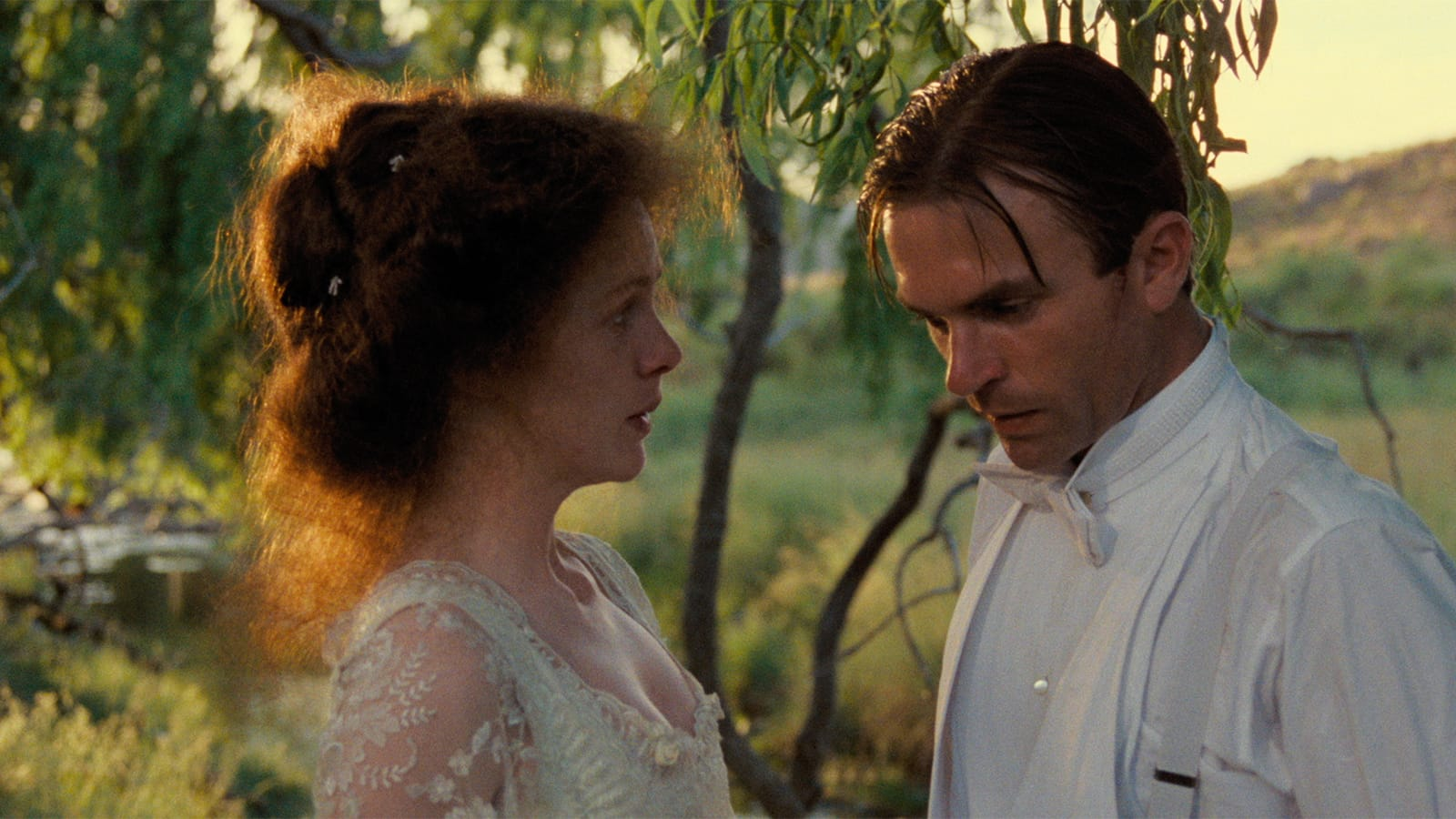
My Brilliant Career (Gillian Armstrong, 1979)
In a movement dominated by men’s stories in dusty and harsh landscapes, My Brilliant Career arrived like a gust of fresh air — a female-directed and scripted adaptation of a female writer’s semi-autobiographical novel, it was literary, feminine, and emotionally rich. Gillian Armstrong’s feature directorial debut reclaimed the period costume drama from heritage clichés and turned it into a quietly radical act of feminist self-definition. The heroine, Sybylla Melvyn (played with radiant defiance by Judy Davis), is a headstrong young woman growing up in rural New South Wales in the late 19th century. Her family expects her to marry well, tame her temper, and accept her place in polite society. But Sybylla wants something else: to write, to live independently, to choose her own destiny, even if she isn’t entirely sure how to make that imagined path a reality. When a charming landowner (the late great Sam Neill, in one of his early breakout roles) falls in love with her, she must choose between convention and conviction, between accepting a narrative handed to generations of women before her or writing a brand new one for herself.
Besides coaxing great performances from her cast, Armstrong handles the visuals exquisitely with the help of cinematographer Donald McAlpine, an Aussie New Wave regular. The landscapes are both lush and confining, both an authentic setting and a deeper reflection of Sybylla’s inner tensions. Likewise, in the interior scenes, costumes rustle, parlour rooms glisten, but underneath everything a quiet rebellion simmers. The drought-stricken farm, the luxuriant estate of Sybylla’s grandmother and the humiliating household where she later works are not heritage-film backdrops but specific material worlds determining what kinds of life a woman was allowed to live. My Brilliant Career opened doors, for Armstrong herself, for the great Judy Davis, and for the many Australian female directors and writers who followed. Its echoes are still felt in films like The Piano, or even Portrait of a Lady on Fire, not to mention the new adaptations of Franklin’s novel. But beyond its historical importance, it remains a joy to watch, a passionate, beautifully performed affirmation that a woman’s story of self-searching and acceptance can make brilliant cinema.
Breaker Morant (Bruce Beresford, 1980)
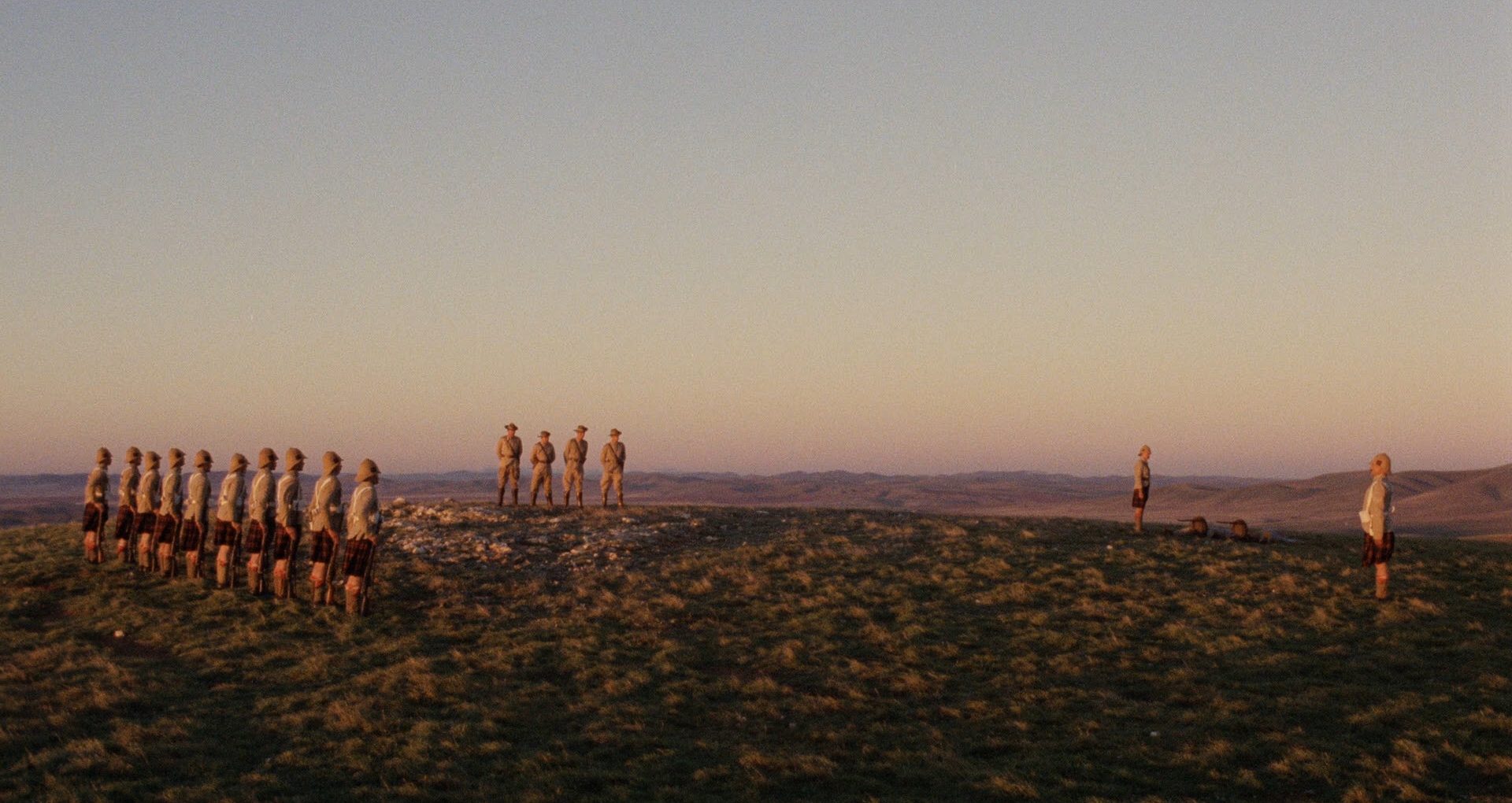
Bruce Beresford began his Australian career with broad, deliberately vulgar “ocker” comedies like The Adventures of Barry McKenzie (1972), but gradually moved towards more ambitious examinations of national character, including Breaker Morant, his international breakthrough. Set during the Second Boer War in 1901 (the same year Australia became a federated nation), the film tells the true story of three Australian soldiers court-martialled for executing Boer prisoners under orders they claim came from their British superiors. Their inexperienced defence lawyer, Major Thomas (Jack Thompson in a Cannes prize-winning performance), slowly realises that the trial is less a search for truth than a political operation — the British command requires scapegoats as it tries to conclude an ugly imperial war.
The film is often remembered as a story of plucky Australians betrayed by perfidious Britain, but its moral complexity depends upon something more troubling: the defendants are indeed scapegoats, yet they did commit the killings for which they are being tried. In the tradition of courtroom dramas like Paths of Glory and King and Country, Beresford’s taut narrative repeatedly collides legal procedure with the lawless practices of counter-guerrilla warfare. Were the men obeying unwritten orders? Can an empire prosecute its subordinates for methods instituted by its commanders? At what point does the line between military discipline and individual culpability blur? As Morant puts it, this is “a new war for a new century”, one in which guerrilla warfare has rendered the old codes of gentlemanly combat obsolete (a theme also explored in Powell and Pressburger’s The Life and Death of Colonel Blimp). Made in the aftermath of the Vietnam War, in which Australia itself had fought on foreign soil, the film turns an episode from 1901 into a debate about modern war crimes and chains of command. Ultimately, it is not just three men but Empire (and war itself) which comes to be on trial.
Like so many of the Aussie New Wave films, Breaker Morant also reflects upon national identity and national myths. The Australians are made to fight for an empire that does not see them as equals, and their trial becomes a bitter lesson in power, sacrifice, and betrayal, a paradox summed up compellingly by Edward Woodward (he of The Wicker Man) as the titular Morant, a cultured, volatile officer and occasional poet, involved in these killings with weary resignation, but who remains defiant against the justice system judging him. Beresford’s direction is deceptively assured: his shifting camera angles continually offer different perspectives on the courtroom proceedings, occasionally employing a split-diopter lens to hold foreground and background figures in equally sharp focus, as if inviting us to scrutinise competing versions of the truth. Just as striking is the near-total absence of a musical score, with period songs and military marches instead supplying an increasingly ironic accompaniment. The finale’s soundtrack is devastating in its stark simplicity, as the reprise of the patriotic song Soldiers of the Queen delivers one last bitter irony: the men die at the hands of the very imperial institution they had been taught to glorify.
Mad Max 2: The Road Warrior (George Miller, 1981)
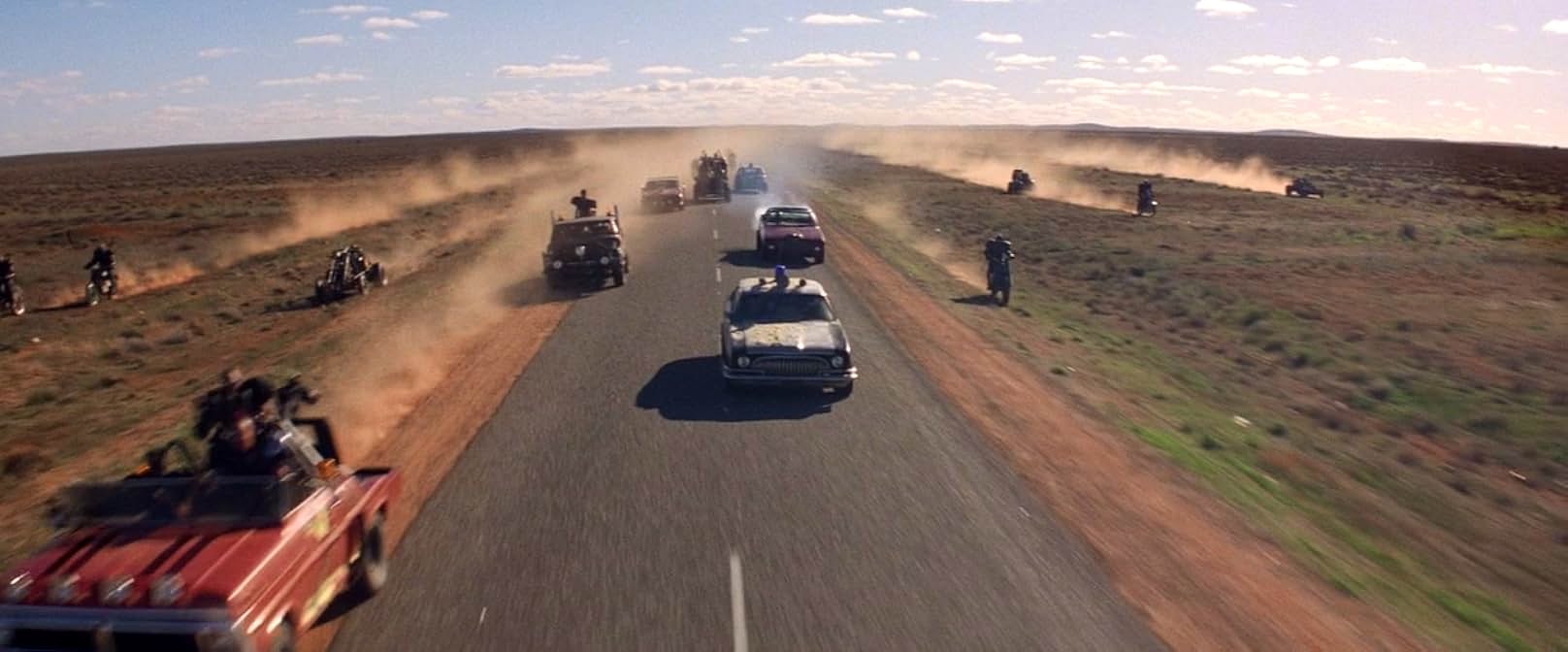
The first Mad Max had already shown that a low-budget Australian genre film could become a worldwide phenomenon, but Mad Max 2 pushed George Miller’s vision into something more mythic, kinetic, and iconically post-apocalyptic. It opens with a documentary-like black-and-white prologue, incorporating archival footage, recasting the near-future breakdown hinted at in the first film as full ecological collapse: conflict over dwindling oil supplies has reduced civilisation to tribal wars across the Australian desert, where petrol is currency and survival depends on machinery and violence. Miller essentially rebuilds the western genre for this new wasteland — horses become supercharged vehicles, the frontier becomes fortified industrial compounds, and marauding outlaws are now punk gladiators in improvised armour. Mel Gibson’s Max is correspondingly stripped down into an archetypal, near-silent wanderer, a solitary hero who rides into a besieged community and reluctantly helps it defend its fuel from a ruthless gang, before disappearing once more into the wilderness.
What makes Mad Max 2 such exhilarating action cinema is its commitment to pure visual storytelling. Max is a reticent protagonist and dialogue is sparse; bodies, vehicles, and landscapes are organised into instantly legible patterns of movement; and Miller’s cutting always makes speed, direction, and danger clear, culminating in a final chase that remains one of the genre’s great set pieces. Of course the influences (from Kurosawa’s samurai to Clint Eastwood’s ‘Man with No Name’) are clear, but Miller never sands off the film’s Australian texture — the Outback, the boomerang, eccentric humour and battered homemade machinery all retain an unmistakably local vibe. While so much of the Australian film revival had looked backwards to locate national identity in the past, and used the Outback as the setting for a clash of incongruous civilisations, Miller projected Australia forward into an imagined future and produced an iconography that filmmakers, comic artists and game designers around the world would imitate for decades. Mad Max 2 marks Australian cinema no longer merely adapting international genre traditions but actively reshaping them.
My First Wife (Paul Cox, 1984)
I’m cheating a little bit here, for auteur director Paul Cox was only ever on the margins of the Australian New Wave — probably exactly where he was happy being: he was far too unique to be assimilated into a movement, and never quite interested in the things the New Wave was known for. He was an immigrant to Australia, Dutch-born, Melbourne-based, and fiercely independent, developing a more personal, European-inflected filmmaking, an unsentimental window onto urban middle-class Australian characters who often turn out to be lonely and eccentric people seeking connection. But so unfairly neglected is Cox that I feel justified to expand the arbitrary ‘new wave’ boundaries and include him in this list.
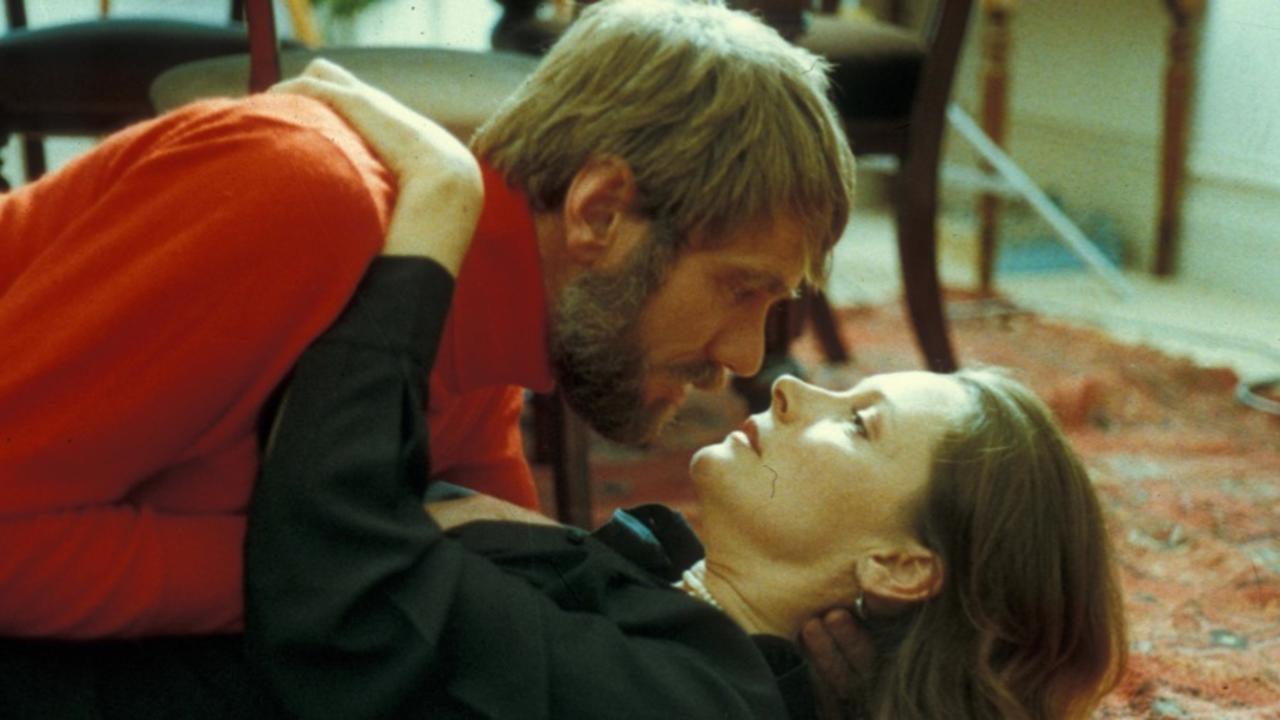
My First Wife, made after the painful collapse of Cox’s own marriage — though he maintained that only its protagonist, not the narrative events, was directly autobiographical — is one of his most devastating films. John (John Hargreaves), a composer and classical-music radio presenter, discovers during a brutally frank bedside conversation that Helen (Wendy Hughes), his wife of ten years, has been having an affair and no longer loves him. What follows is less a conventional adultery drama than the spectacle of a man discovering the life he assumed stable has already disappeared, while other generations (John and Helen’s children, John and Helen’s respective sets of parents each seeking to influence their son or daughter) are deeply implicated in the break-up. Never judging his characters, never turning pain into moral vindication, Cox and his fine cast turn this into a probing, emotionally mature film asking simple but fundamental questions: is falling out of love sufficient reason to dismantle a family, and what exactly is owed to other people when individual happiness demands leaving them behind?
Domestic realism is never allowed to overshadow something more lyrical and subjective: Cox was a lover of photography, theatre, and music and that all shows in his work. The flashbacks of grainy, home-movie-like montages of childbirth, marriage and remembered happiness, the music of Gluck, Haydn, and Carl Orff giving private memory an almost operatic intensity, and the subjective representations of John’s psychic state all attest to a productive tension between domestic drama and internal emotion which is quintessential Cox. This is a filmmaker who should be far better remembered globally. His collaboration with Isabelle Huppert in Cactus (1986), with his good friend Werner Herzog whom he cast in a cameo as a disciplinarian father in Man of Flowers (1983), or his formally inventive Van Gogh documentary Vincent (1987) were small arthouse hits in the 1980s, but now are hard to track and badly deserve to be rediscovered. They are also all evidence of Cox’s border-crossing interests and collaborations, something that placed him just outside the Aussie New Wave, even if he did make some of Australia’s most mature and moving films. By the early 1980s, the revived industry had become confident and varied enough to sustain such an idiosyncratic auteur, and Cox’s work is modest proof that a national cinema comes of age not when it cements one defining identity, but when it makes room for a range of personal visions.

